Inscribed Capital
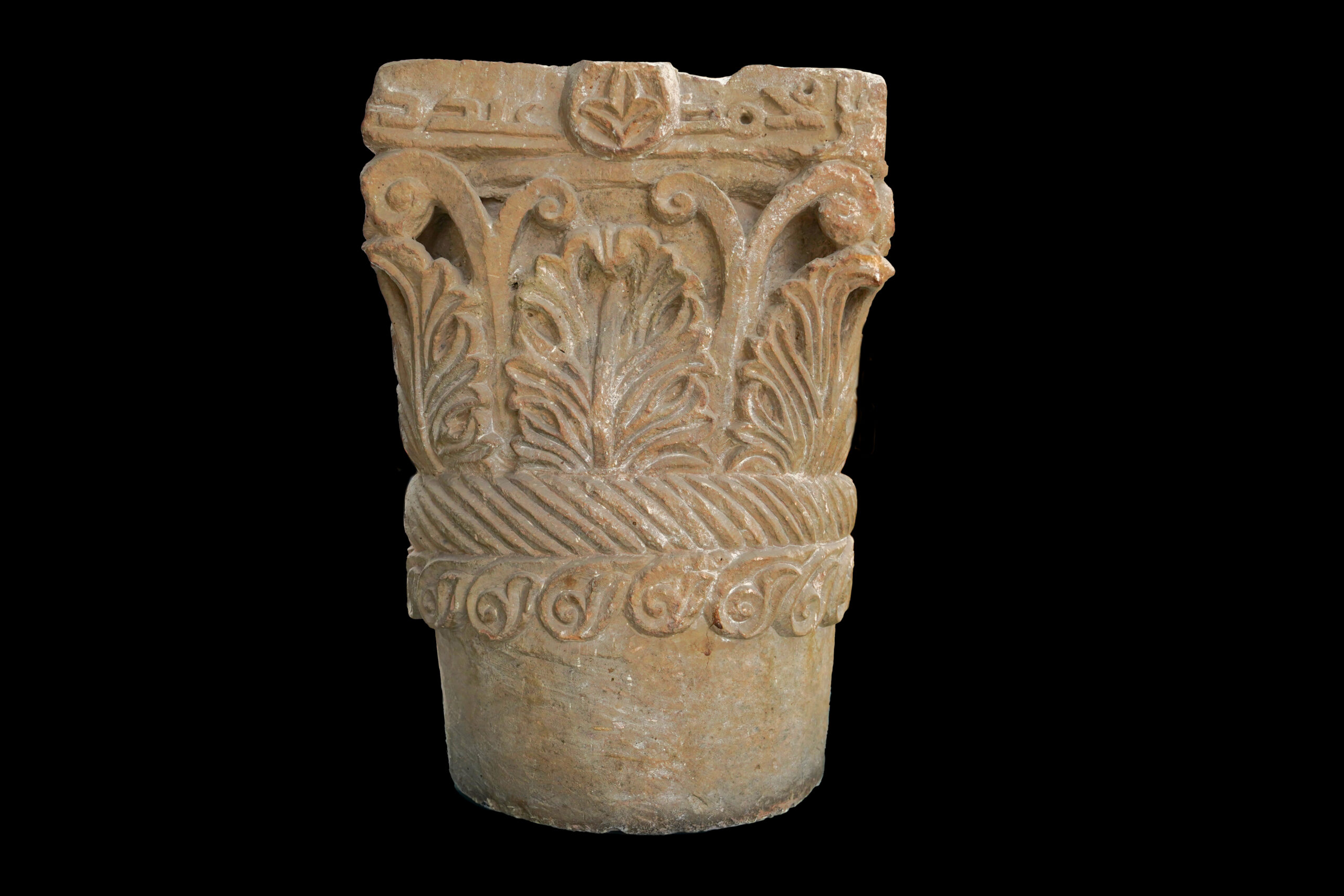
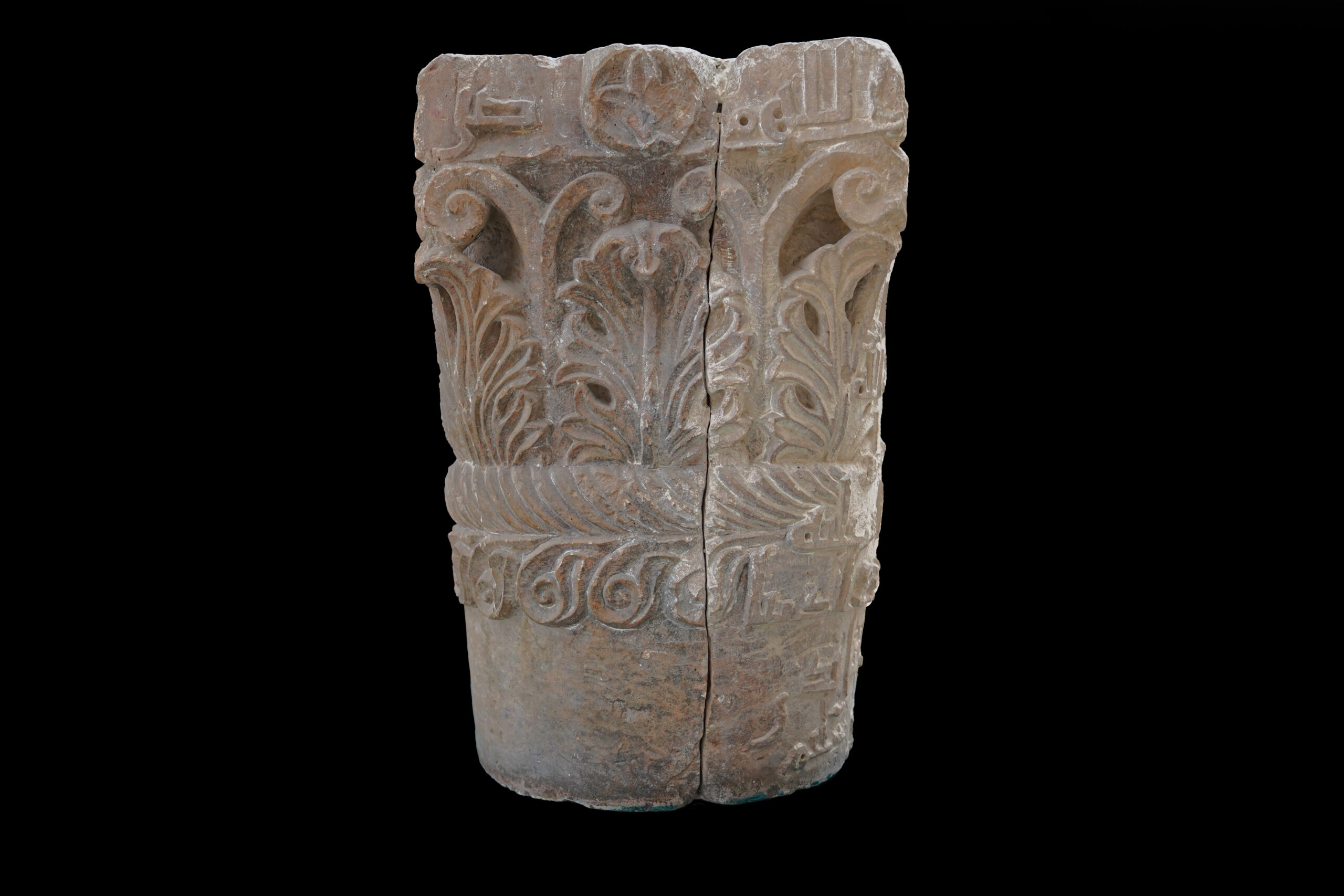
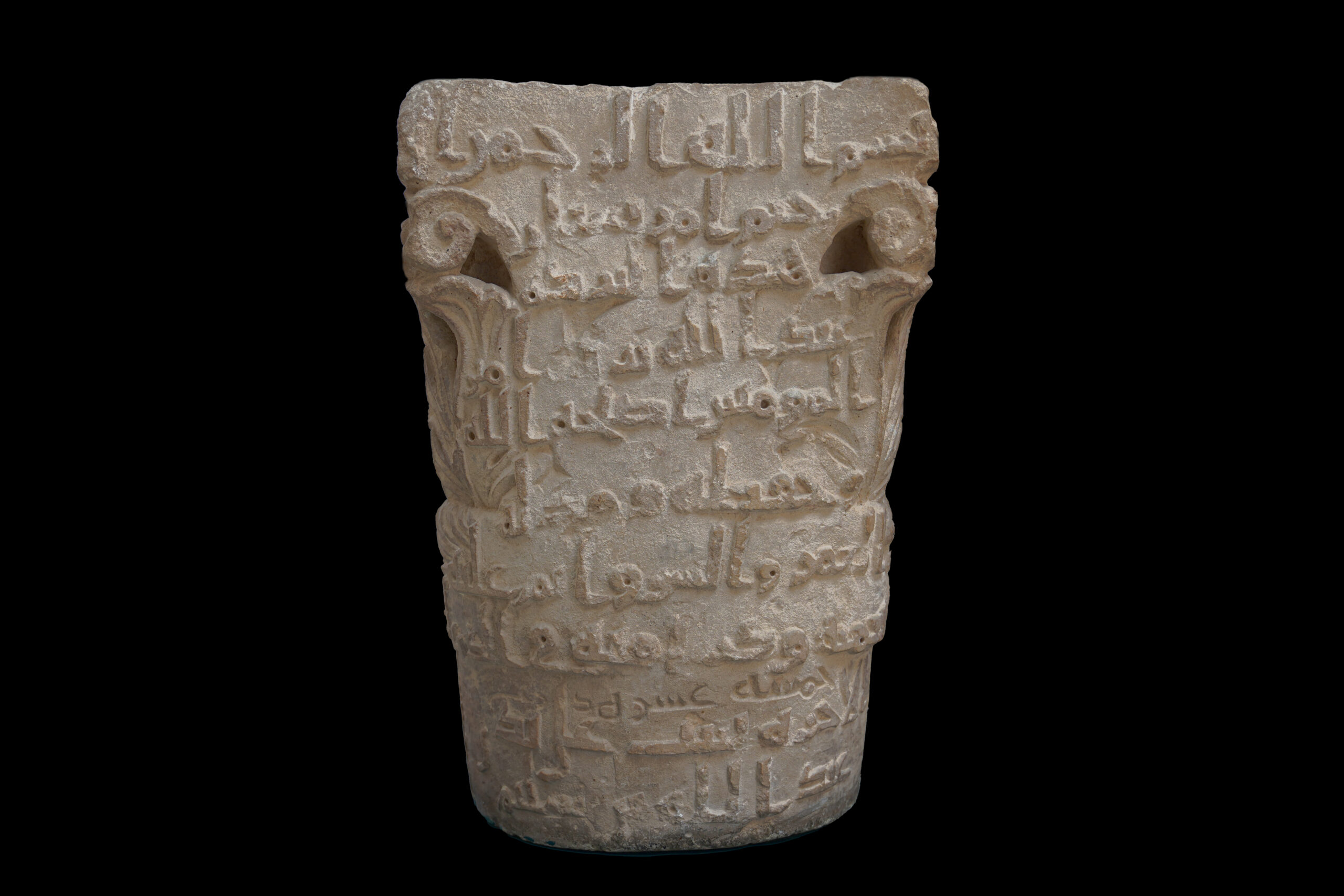
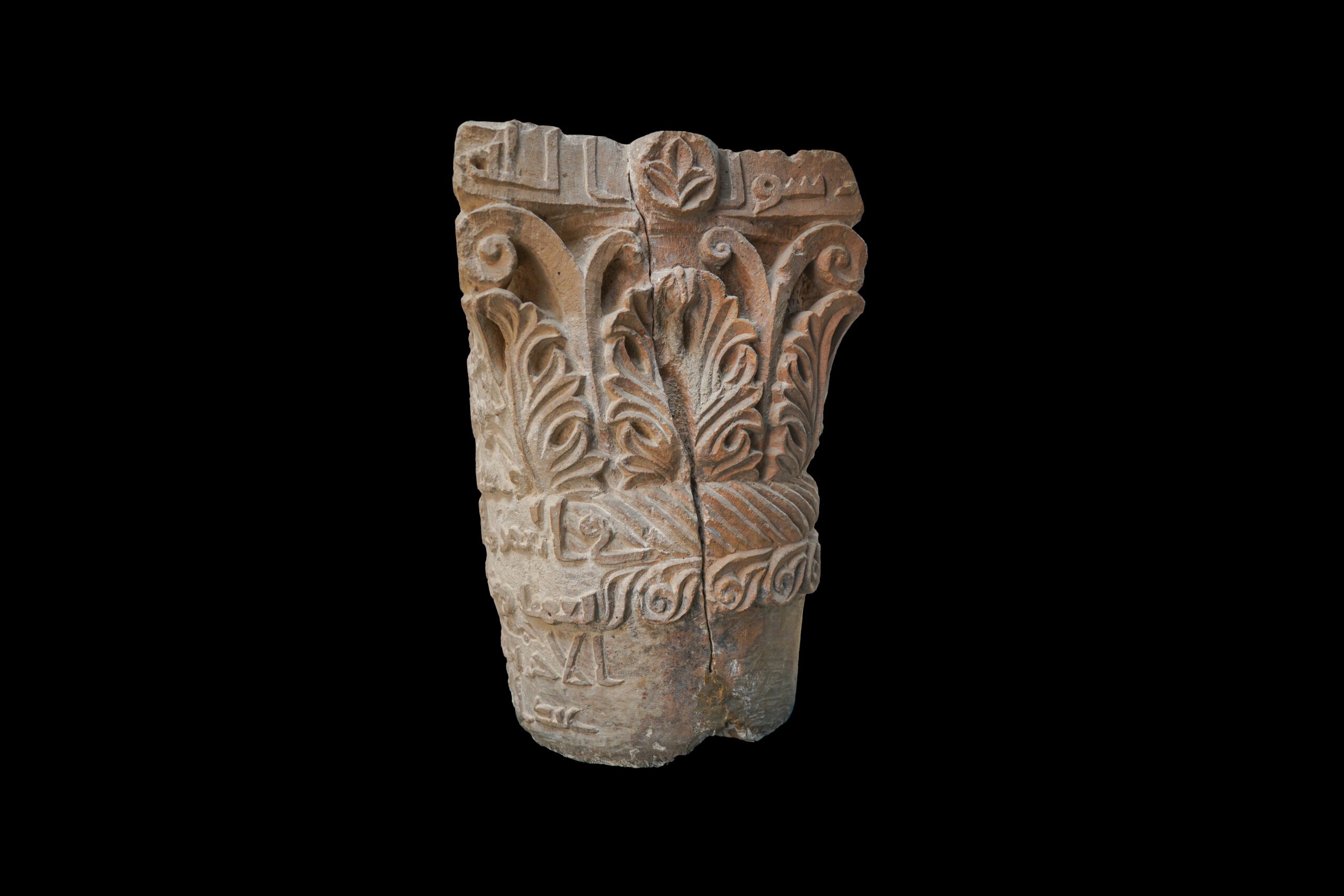
Column capital with Arabic inscriptions. Three sides of the capital are decorated with a row of acanthus leaves separated by paired volutes. One side contains a ten-line Arabic inscription that stands out in relief from a plain background. This inscription translates as: “In the name of the most merciful God. Has ordered the building of this pool the servant of God, Yazid commander of the faithful, may God favour him and prolong his life and happiness and bestow upon him blessing and bounties in this world and the next. It has been built by the care of `Abdallah the son of Sulayman”. A second inscription in relief runs around the abacus of the three decorated sides, interrupted in the middle of each by a circular boss with an inscribed trefoil. It translates as: “O God bless your servant and messenger Muhammad”.
Between the 8th and 9th lines of the first inscription, three words are incised in smaller characters, they translate as: “fifteen cubits”. This is one of 18 capitals that belonged to the water reservoir at the Umayyad palace of al-Muwaqqar, but it is the only one that is inscribed and its inscription confirms the literary evidence that the al-Muwaqqar palace was built by the Caliph Yazid II (ruled 720-724 AD). The drum of the column, upon which this capital once sat, would have been immersed in the cistern. On the drum there are other incised words indicating the number of cubits, thus it formed a water gauge with the highest measurement on the capital itself, being 15 cubits.
This capital is the only known inscribed gauge capital of the Umayyad period. It epitomizes the spirit of the emerging new Islamic art: using Arabic calligraphy as a main decorative component while still retaining elements inherited through a long artistic tradition.
Site: Al-Muwaqqar, near Amman
Period: Umayyad, 720-724 AD
Pictures Of Pieces