Box with Ivory Inlay and Appliqués
The ivories decorating this box were discovered during archaeological excavations at Pella in the northern Jordan Valley in 1984. This ancient city is situated along major routes that connected Egypt and Palestine with the Jordanian Plateau and Syria.
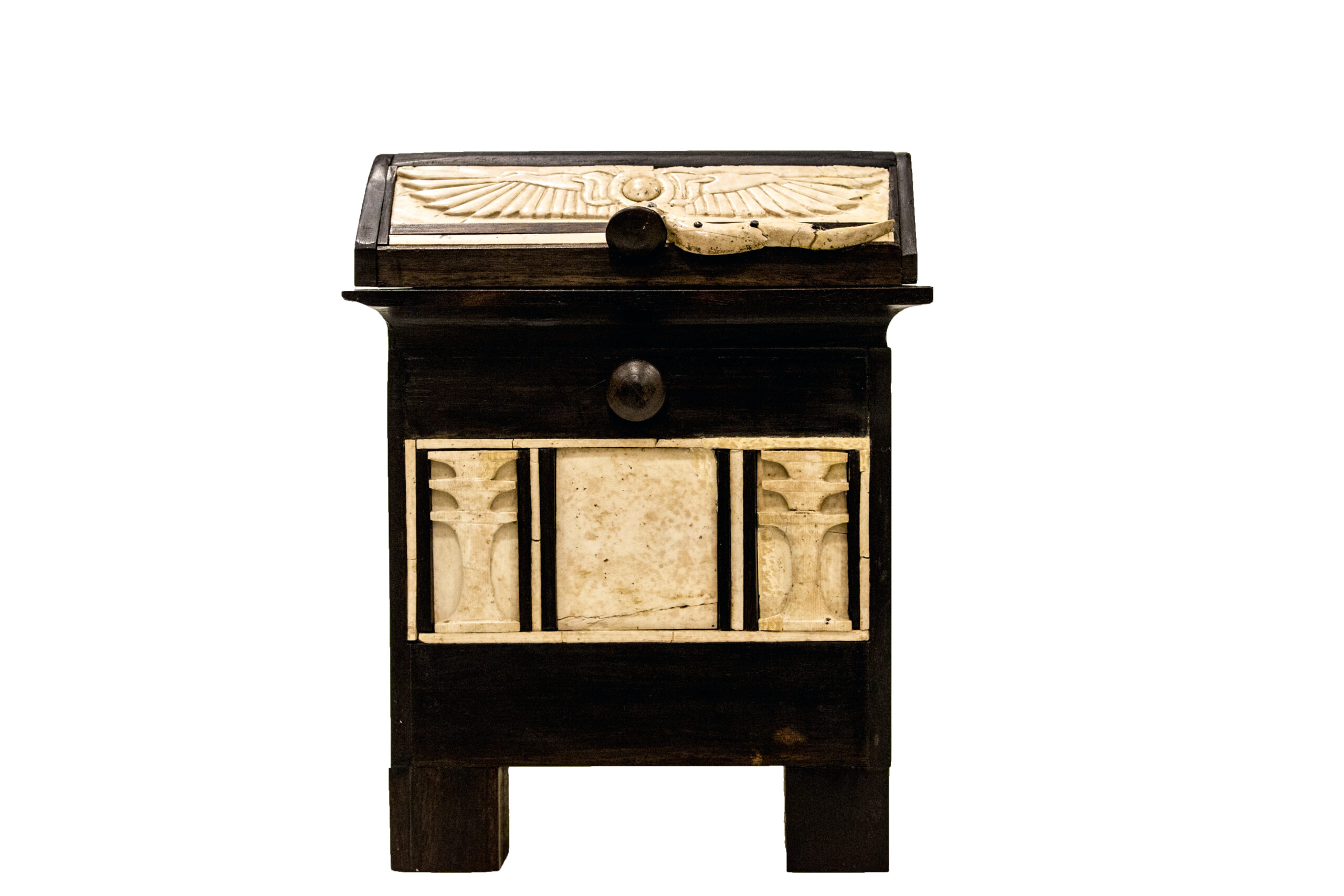
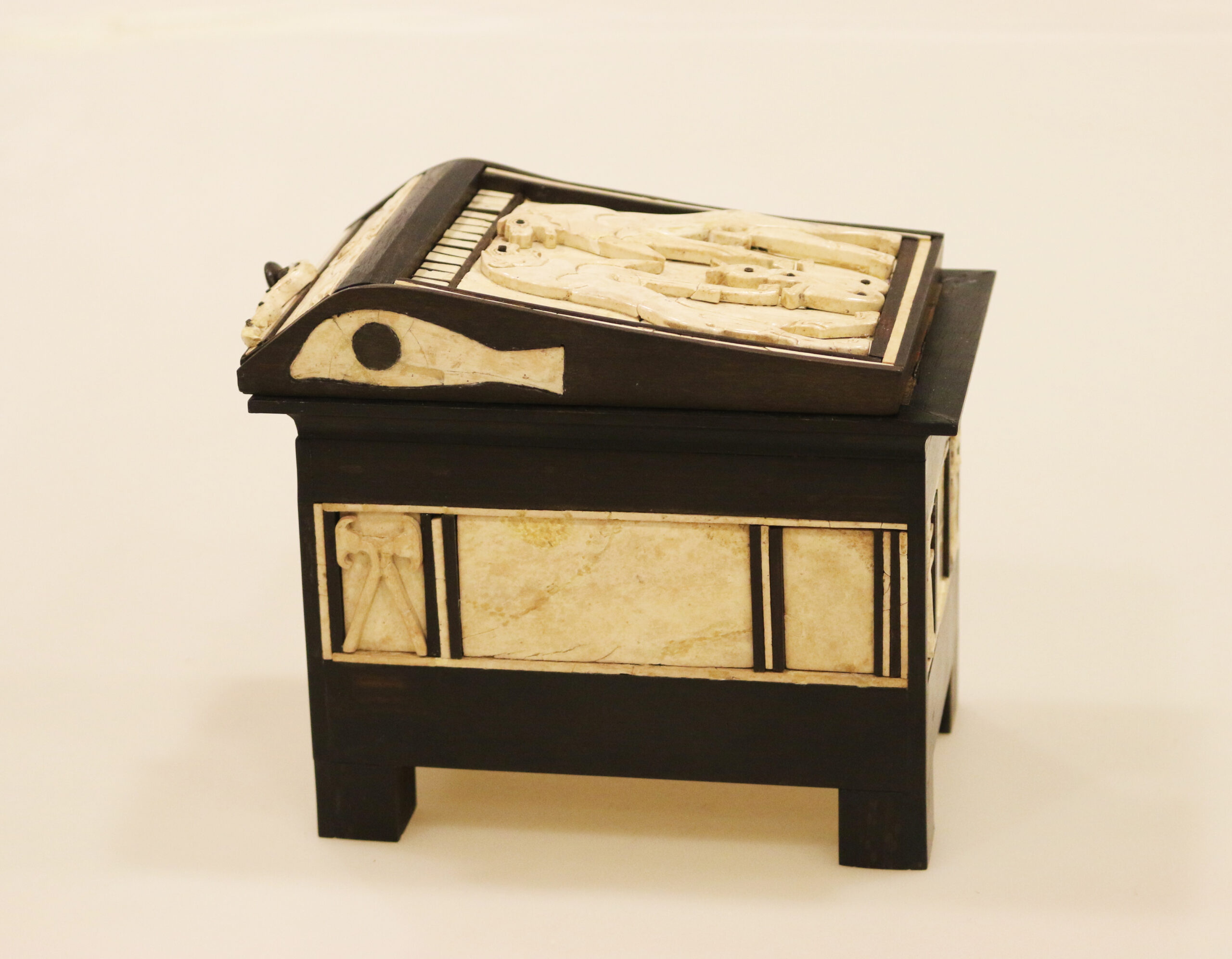
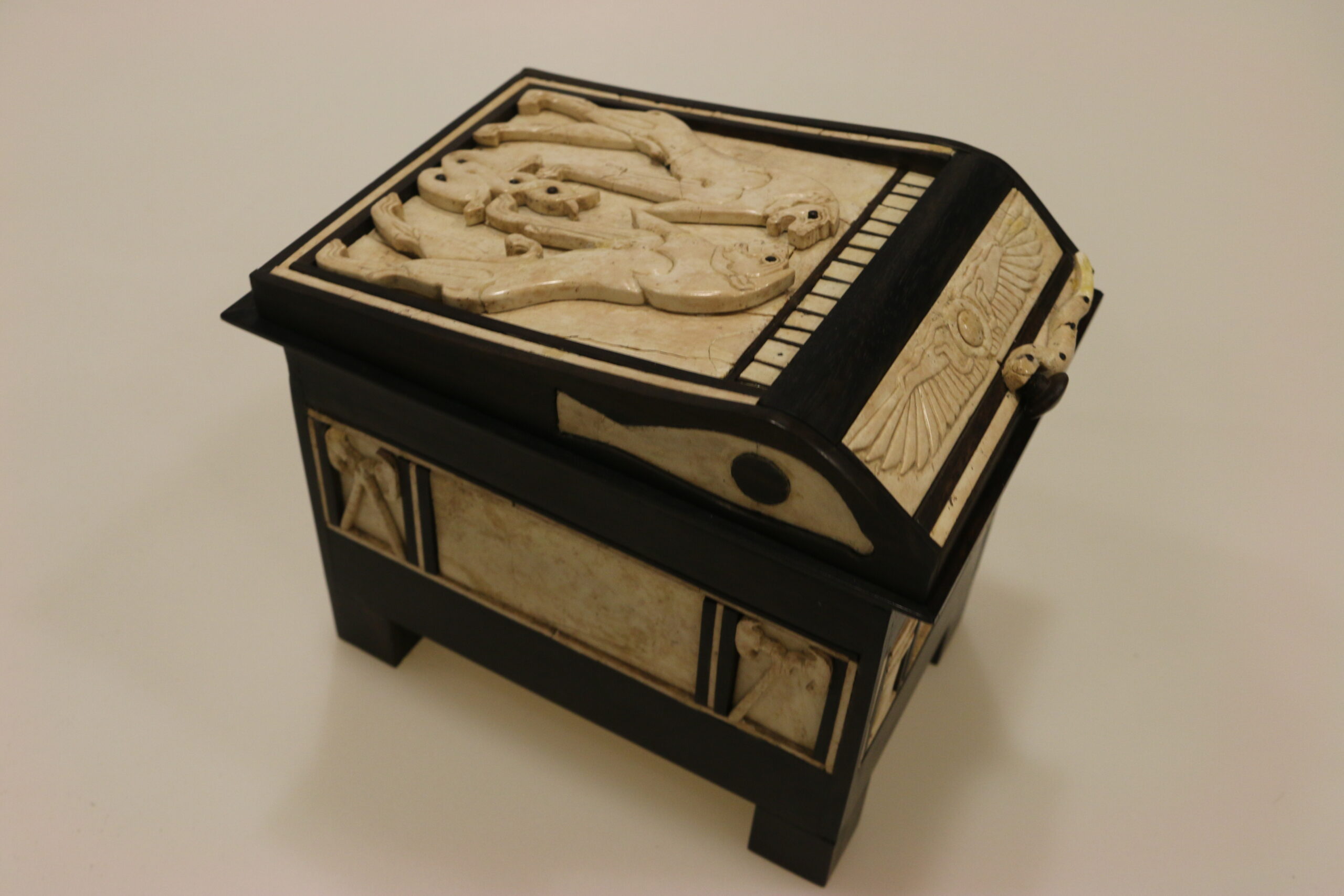
The wood of the box, which was most probably ebony, had decayed but it was possible to reconstruct it judging by the positions of the ivory panels upon discovery, and by comparisons to contemporary Egyptian boxes. This comparison to Egypt is suggested by the imagery depicted on the box as well.
The main panel on the lid has two opposing aggressive lions with their paws on the heads of two intertwined cobras. Above is a long panel depicting the winged sun-disc, the symbol of the Egyptian god Horus, while the sides of the lid have inlays in the form of the Eye of Horus. Right next to the knob for closing the box is a viper snake. The Egyptian motifs continue on the body that has djed pillars at the edges of the short sides, and paired papyrus stalks at the long sides.
The box is most probably a product of the Syro-Palestinian coast, noting that a species of small elephants was native to Syria up to the first millennium BC and only became extinct several hundred years after this box was made.
Site: Pella/ Tabaqat Fahl in the Jordan Valley.
Period: Middle Bronze Age, around 1650-1550 BC.
Pictures Of Pieces