Oldest Large-Scale Statue in the World
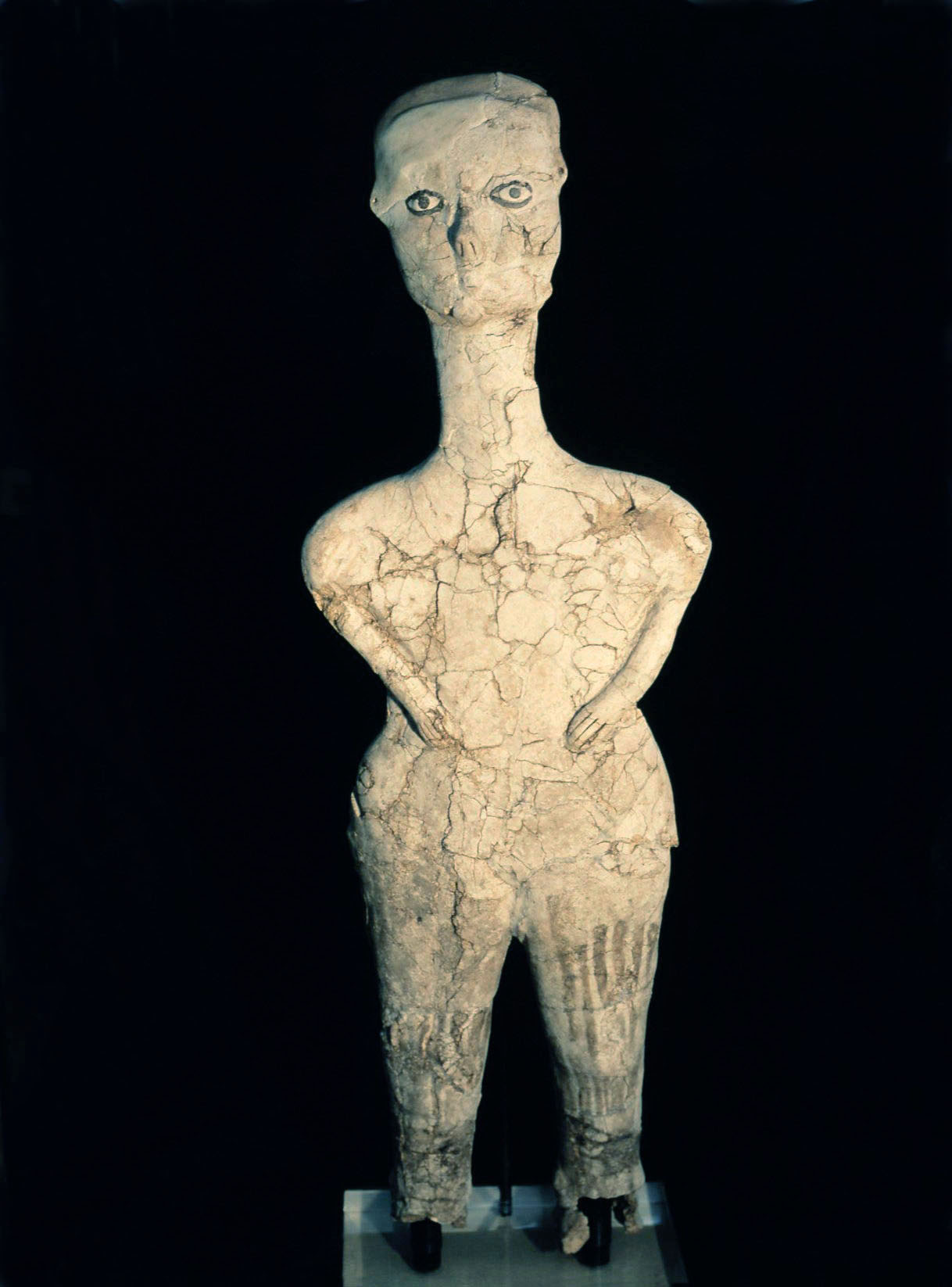
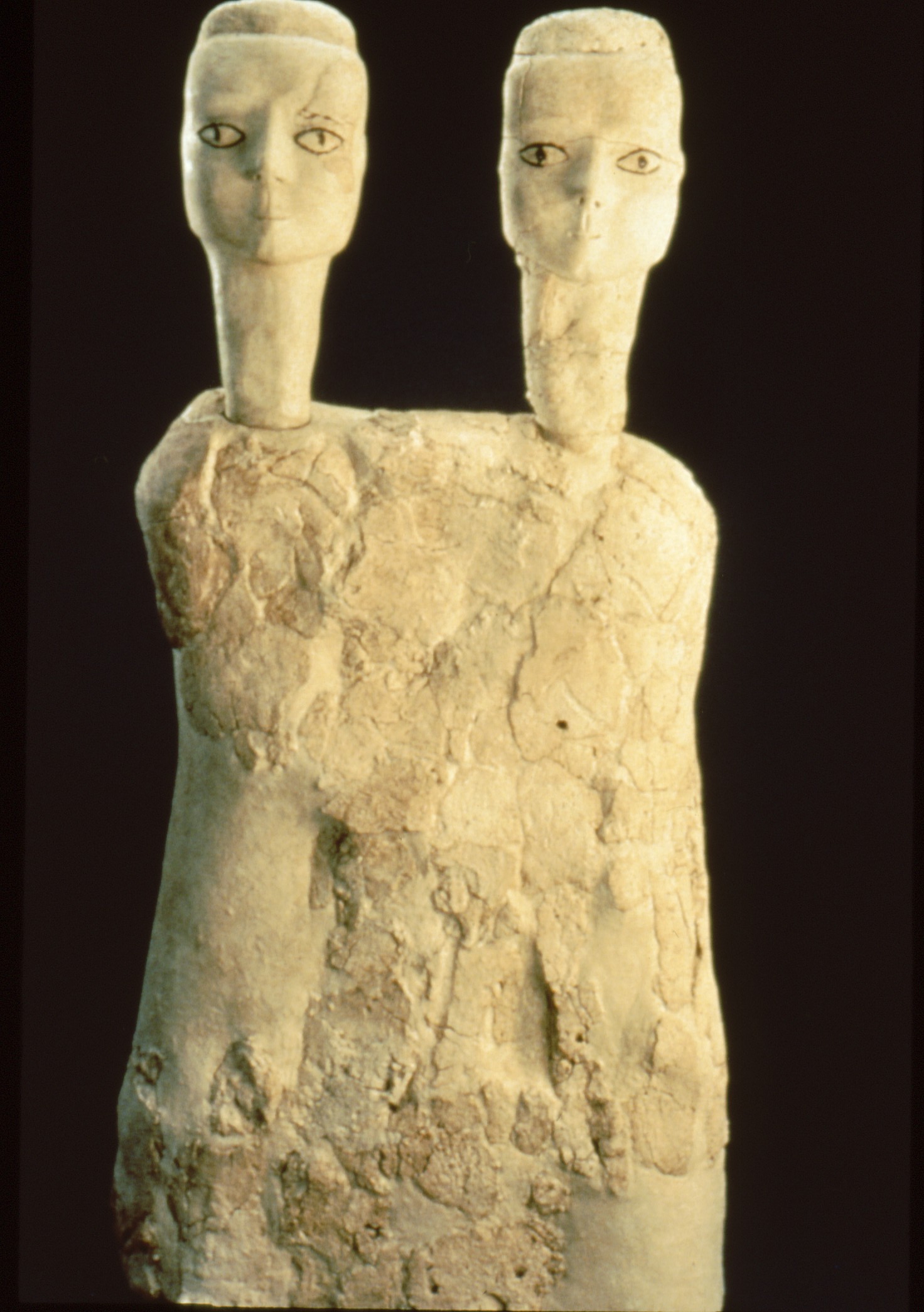
The most dramatic discovery was at ‘Ayn Ghazal, where 32 lime plaster statues were found in 1983 and 1985. These statues are among the world’s oldest large-scale statues of human form. The statues were made on reed frames then covered by plaster. They were found in two groups, each was laid in a pit specially dug for their deposition. Both groups were buried under the floors of long-abandoned houses, and their general orientation was east-west, except for one. Radiocarbon dating gives dates for these statues towards the end of the eighth millennium BC. Both radiocarbon dating and stratigraphic evidence indicate that the group discovered in 1983 is as much as 200 years earlier than that discovered in 1985.
These Statues are not only the oldest in the world, but also one of the oldest human innovations represented in converting limestone into plaster using high temperatures exceeding 900 Celsius.
The exact role of the statues in Neolithic ritual and religion is still not clear. They may have represented ancestors, as their burial manner was similar to the way the dead were buried, or they may have been mythical figures, responsible for life and fertility.
Site: `Ayn Ghazal, within Amman
Period: Pre-Pottery Neolithic B, around 7500 BC
Pictures Of Pieces