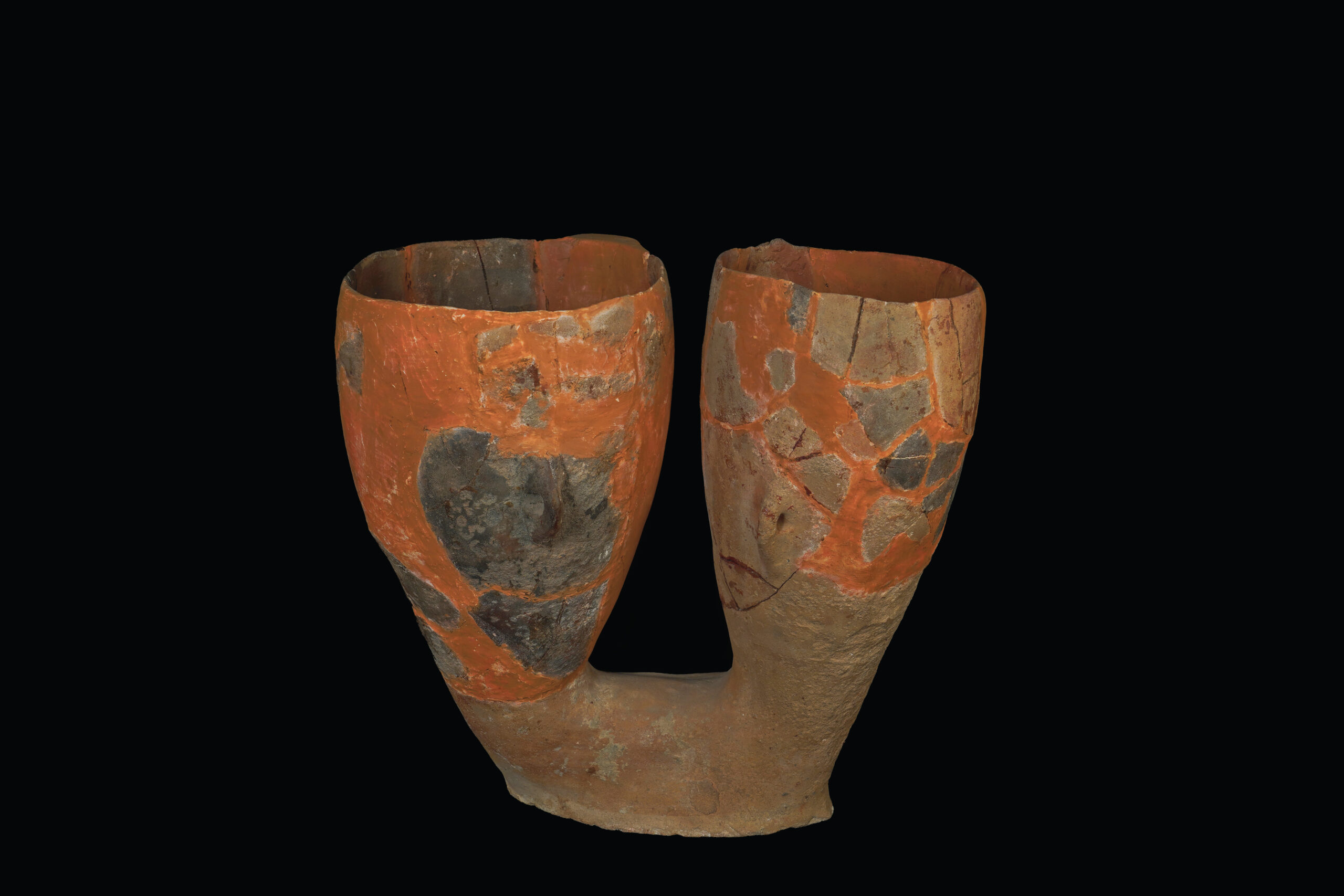
Twin Cornets
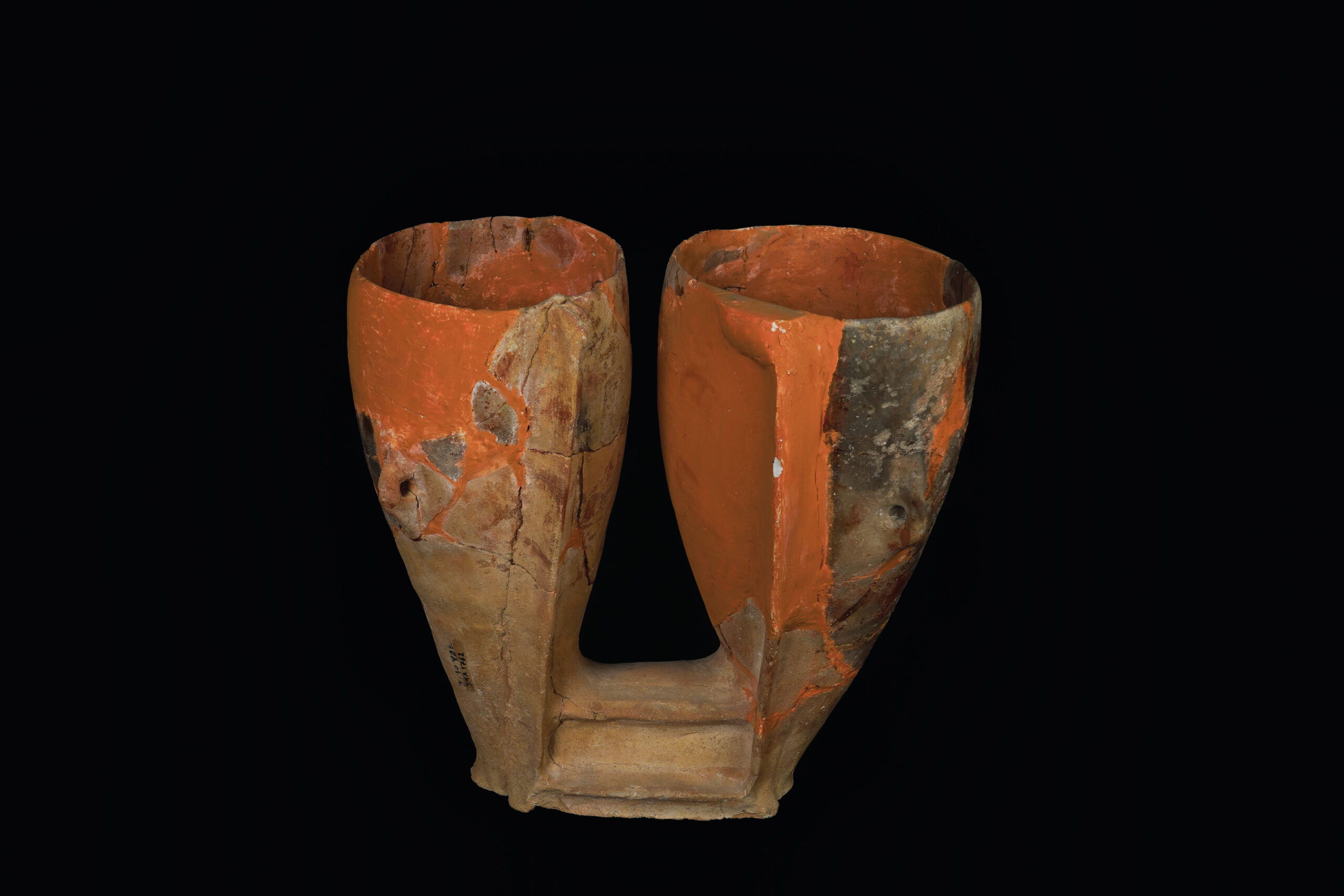
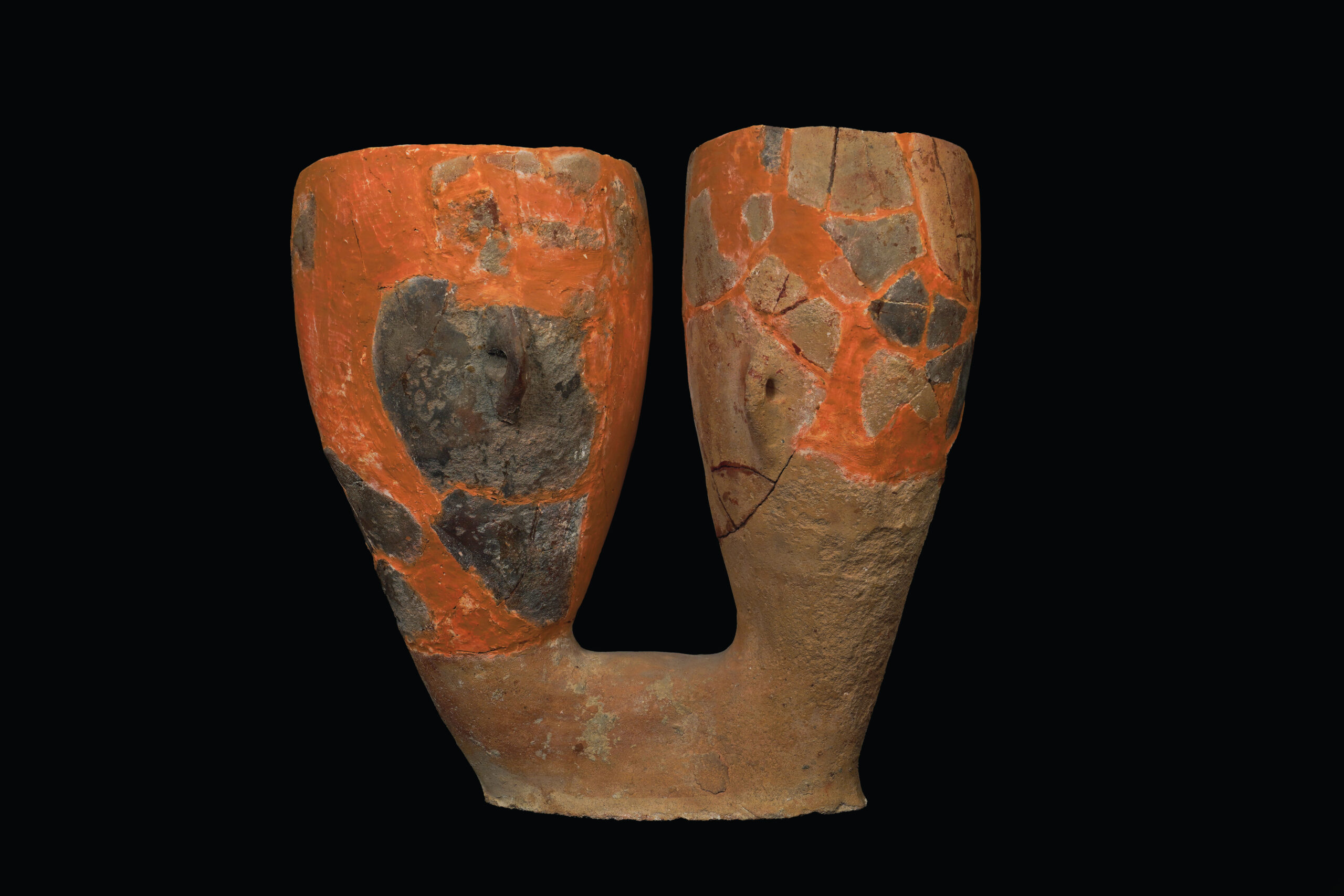
The twin conical vessels are connected with a channel through the base, thus any liquid they may hold would be at the same level in both. Each cornet has two small pierced lug handles that could serve for hanging. They also bear remains of painted decoration in red, but what remains is too patchy to determine the original pattern.
The Chalcolithic was a time of developed villages, a time when there was enough posterity for technological and theoretical advances. This was the time when people could control fire well enough to be able to extract the first metal from nature: copper, and to produce better pottery. The pottery was hand made as it took several more centuries for the wheel to get invented.
The development of village life in the Chalcolithic also meant advancements in agriculture. Archaeological evidence indicates that the semi arid region of the Dead Sea, where Tulaylat al-Ghassul is situated, was much greener and fertile during the Chalcolithic, more similar to the Mediterranean climate. In the Jordan Valley, the two most distinctive Mediterranean plants, the vine and olive, were domesticated at that time. The cornet form that was first produced at Tulaylat al-Ghassul developed into the wine glass that we know today, and it may have had a similar function then.
Site: Tulaylat al-Ghassul, Jordan Valley near the northern tip of the Dead Sea
Period: Chalcolithic, around 3800-3350 BC
Pictures Of Pieces